Posts

Feast of the Holy Trinity
Image
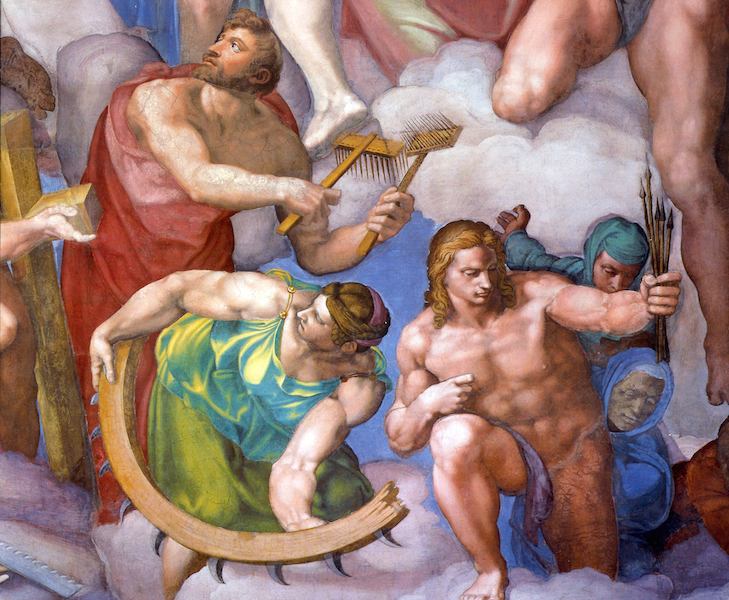
  TRINITY SUNDAY  Let’s begin by pretending that we are in Rome. We’re stepping into the Sistine Chapel so that we can reflect upon a display known as The Last Judgment . We will need a period of time because this panoramic fresco takes up an entire wall. The great Renaissance artist Michelangelo initiated this project in the year 1536 and finally was able to finish it in the year 1541. Our guide calls attention to the fact that the artist himself appears twice within this masterpiece. He’s depicted in connection with St. Bartholomew in one panel, and then he appears again, looking on as the dead are being called forth to experience the resurrection. So as an artist he’s placing himself within his work of creation. For all practical purposes, this is Michelangelo entering into what it is that he has created.  The purpose behind this illustration is that the Trinity can be understood along similar lines. In the Book of Genesis we read about God’s great act of creation. The...

Feast of Pentecost

Image
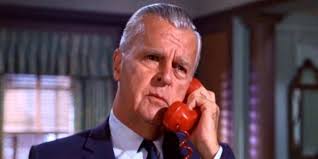
  FEAST OF PENTECOST  Imagine for a moment that you are Commissioner Gordon. You head up the police force in Gotham City. When you learn about criminal activity, you typically turn to the uniformed officers who serve under your command. They represent what could be called the conventional option. And yet, sometimes you have to deal with exceptional situations. When the conventional option is no longer sufficient, you pursue the unconventional option: namely, Batman .  You make use of either the Bat-Signal or the Bat-Phone. That’s what you do if you happen to be Commissioner Gordon of Gotham City. You’re the kind of police commissioner who is more than willing to admit that he might need some extra help. And that’s good news for the people of Gotham. It’s a better place to live, because the commissioner chooses to take this humble and honest approach.  The point of this illustration is to consider whether the Commissioner Gordon approach can bring some benefit to you...

Feast of the Ascension [B]

Image
  FEAST OF THE ASCENSION  I recall attending the annual Old Engine Show in Buckley. I had just been installed as the new pastor at St. Patrick’s, located roughly nine miles north of Buckley, on the outskirts of Traverse City. Having arrived at the Old Engine Show, I walked up and down the lanes, reviewed the displays, and then I stopped for something to eat. Volunteers from St. Patrick’s were staffing a food booth, so I dropped in on them, did some visiting, and had a light lunch. Then it was time to head home, back to St. Patrick’s.  Stepping into the rectory, I dug out a pair of scissors so that I could cut off the synthetic bracelet that had been placed upon my wrist. That bracelet had served as verification that I was a paying customer. When you pay the price of admission, they fasten the band around your wrist. This same practice is carried out at the annual Northwest Michigan Fair. You wear the wristband through the course of your stay—and then you remove it soon af...

Sixth Sunday of Easter [B]

Image
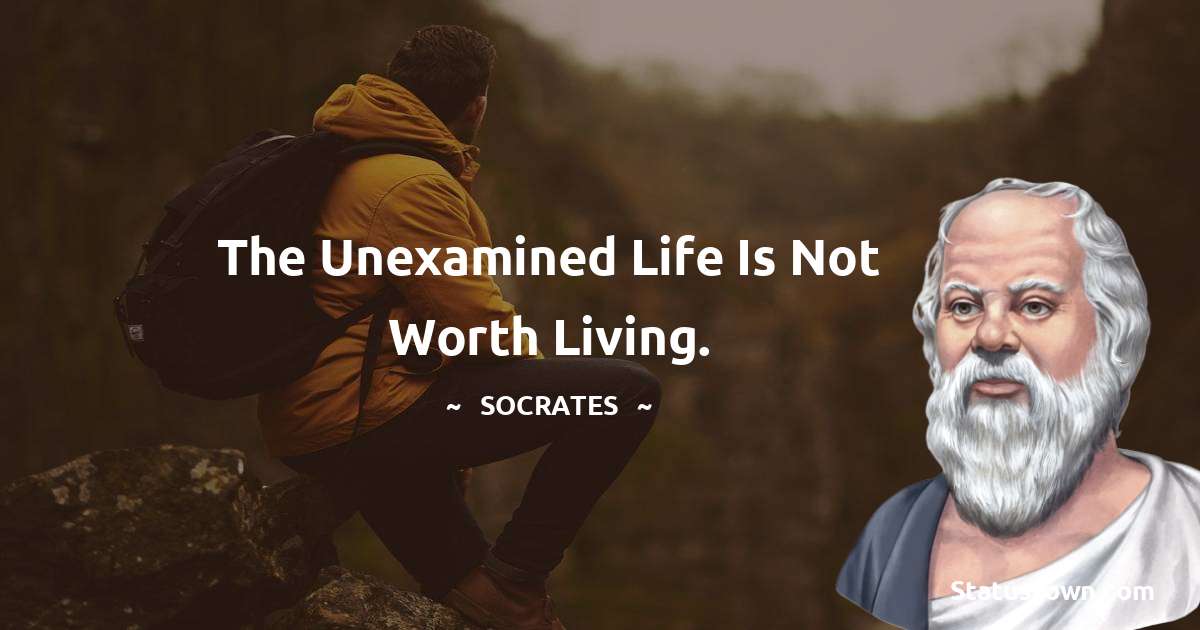
  SIXTH SUNDAY OF EASTER We would rank the Greek philosopher Socrates (470–399, BC) as one of the greatest thinkers of all time. He was a profound thinker, and he encouraged others to engage in their own practice of deep thinking. What does he want you to think about? For the most part, he wants you to think about life. You’re being called to think about life, but not simply in general terms; the recommendation is that you think about your particular life—the life that you are in the process of living. According to Socrates, the unexamined life is not a life worth living. Therefore, if your life is ticking away, without the benefit of being examined, then it could be said that you are essentially depriving yourself. At least that’s what a man like Socrates would say.  Now let’s consider John the Evangelist: what would he have to say? John would probably take it a step further. He would find fault with the unexamined life—and he would be even more critical of a life that never...

Fifth Sunday of Easter [B]

Image
  FIFTH SUNDAY OF EASTER Imagine that you are channel-surfing. You pause at the Cartoon Network, to check in on Bugs Bunny. He’s not up to his usual antics; rather, he’s sitting beneath an apple tree, reading about the Knights of the Round Table. The pace picks up, however, as he finds himself being transported back to that original period. He’s no longer reading about the world of King Arthur; now he’s actually experiencing it first hand. Through the course of this episode he will be challenged to a joust, he will have to escape from a fire-breathing dragon, and he will have to match wits against a devious court magician [an episode titled “Knight-Mare Hare”]. As the story comes to a conclusion, Bugs convinces himself that it was all just a dream. And yet, at the very last moment, we will see evidence that maybe it was more than just a dream.  Why open with this particular illustration? We’re spending time in the Acts of the Apostles. We hear about the issues that were bein...

Fourth Sunday of Easter [B]

Image
  FOURTH SUNDAY OF EASTER You hear a question being transmitted from the speaker of your 1948 RCA Victor radio: “Who knows what evil lurks within the hearts of men?”  What’s being implied here is that the average person probably would not know. The average person wouldn’t know about that inner dimension. And yet, even if the average person doesn’t know, there is somebody who does know: The Shadow knows!  The Shadow knows about the subject of evil.  Of course, the Lord also knows. He knows about the human heart and its capacity for evil. It turns out that he also knows something about the subject of shepherding. According to the Gospel of John chapter ten, he knows each and every one of the sheep assigned to his flock, from the inside out. Likewise, the sheep know him (10:14). How well do we know him? Do we know him inside and out? No, we can’t make that type of claim. But we can say that the knowledge we have deepens over the course of time.  Consider the exampl...

Third Sunday of Easter [B]

Image
  THIRD SUNDAY OF EASTER Let’s consider whether it was really necessary for Jesus to die on the cross? We know that he did die; but was it truly necessary? According to Jesus, it was. Note his choice of words in Luke chapter 24:  These are the words that I spoke to you while I was still with you, that everything written about me in the law of Moses and in the prophets must be fulfilled..[T]hus it is written that the Messiah would suffer and rise from the dead on the third day and that repentance for the forgiveness of sins would be preached in his name to all of the nations, beginning in Jerusalem [verses 44-48, emphasis added].  In other words, the divine plan necessarily includes the sacrifice of Jesus on Calvary. Does this reflect an aspect of cruelty or severity? Perhaps it seems outrageous that innocent blood has to be spilled in order to satisfy God’s blazing wrath.  And yet, suppose for a moment that it’s not about pacifying a vengeful God; suppose rather th...