Posts

7th Sunday of Ordinary Time [C]

Image
  SEVENTH SUNDAY OF ORDINARY TIME [C] We’ll be able to agree that Jack London knew how to cover both ends of the spectrum. His 1903 novel leads us into the wild; meanwhile, in his 1906 novel, we put the wilderness behind us. The title speaks for itself, with regard to his 1903 novel: The Call of the Wild . Here, we follow the story of a domesticated dog who transitions to the wild. Subsequently, the 1906 novel traces the path of a wolf that becomes domesticated, taking on the name of White-Fang . In each instance, we hear about one set of instincts being exchanged for another set of instincts.  The call that comes from the wild can be described as rather compelling. That being said, we also need to consider the call that comes from within the pages of sacred scripture. When David spares the life of King Saul, we actually find ourselves being implicated (see 1st Sam. 26:1-25). Our own approach needs to parallel the approach of David. In other words, we need to incorporate the ...

6th Sunday of Ordinary Time [C]

Image
  SIXTH SUNDAY OF ORDINARY TIME [C] Realtors will tell you that it’s all about “location, location, location.”  This would seem to be especially true if you happen to be a tree. Everything depends upon your location; the question of where it is that you’ve been planted. If you’re a tree trying to survive in a bed of dried lava, this amounts to a very serious disadvantage. Meanwhile, if you’re positioned by a running stream, then the disadvantage converts into an actual advantage (see Jer. 17:5-8).  According to St. Paul, you will be gaining the ultimate advantage when you choose to accept Jesus into your life. And yet, you will notice that he’s making a distinction; he’s distinguishing between the complete Jesus and the incomplete Jesus. You’re doing yourself a favor when you make a decision for the complete Jesus: the Jesus who not only knows how to teach, but also knows how to redeem. The complete Jesus knows how to deliver a meaningful sermon (as we hear being presen...

5th Sunday of Ordinary Time [C]

Image
  FIFTH SUNDAY, ORDINARY TIME [C] You might see a “Giving Tree” at your place of worship—especially during the period that leads up to the Christmas season. The concept derives from an old Near Eastern fable about a tree that bears fruit perpetually and never seems to age. Locals partake of the fruit, along with those who are passing through on their travels. However, the day arrives when a greedy merchant announces that he has purchased the parcel of land surrounding the mystical tree. He fences off the property, denying the people from having any access to the tree. And as a result, the tree withers and eventually dies. The tree flourished when it was allowed to share of its abundance. Now that the fruit is being retained, the tree can longer be considered a “Giving Tree.”  The very nature of the tree is being confounded. If it can’t share, then it has no reason to go on living.  Our God can be likened to a tree. He bears a particular kind of fruit; we’ll call it the fr...

Feast of the Presentation

Image
  FEAST OF THE PRESENTATION  Normally, we would be observing the Fourth Sunday of Ordinary Time. However, this year the Fourth Sunday coincides with the Feast of the Presentation (Feb 2nd). Therefore we are being called upon to celebrate the feast day rather than the Sunday. You might be wondering: what makes the Presentation so important? We’ve already commemorated the arrival of Jesus; we did that on December 25th. The arrival in Bethlehem is what really matters. This marks the bridging of a gap between our world and that other world. Jesus belongs to the world of the divine. By being born of a human mother, the world of divinity and the world of humanity are brought together, or we could say “reconciled.”  Therefore, why should we be so concerned about this visit to the temple in Jerusalem?  Simeon recognizes the significance of the occasion. Likewise, Anna recognizes the significance of the occasion (see Luke 2:22-38). They’ve been waiting and waiting; for all pr...

Third Sunday of Ordinary Time [C]

Image
THIRD SUNDAY OF ORDINARY TIME [C] On New Year’s Day, 1863, President Abraham Lincoln delivered an edict that would become known as the Emancipation Proclamation . This declaration would alter the legal status of roughly 3.5 million slaves, releasing them from a state of bondage, clearing the way so that they could eventually be granted the full rights of citizenship. Having been emancipated, they would now have the opportunity to transition from one way of life to another way of life.  Essentially, we are talking about liberation—liberation on a grand scale. Similarly, when the Israelites depart from Egypt, this represents an Old Testament example of liberation taking place on a grand scale. Likewise, when the time of Babylonian exile comes to an end, this marks yet another case where liberation is taking effect on a grand scale. In Nehemiah chapter eight we are allowed to look in on the freshly liberated Jews as they commit themselves to the process of reconstruction. Their prayer...

2nd Sunday of Ordinary Time [C]

Image
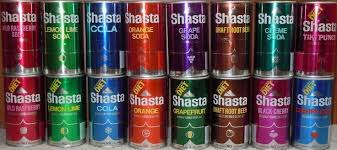
  2ND SUNDAY OF ORDINARY TIME [C]  Early on in life I developed a taste for soda-pop, particularly cola-flavored soda-pop. My Mom did the best that she could to accommodate my craving for cola. I can say that she did keep a steady supply of cola in the refrigerator—unfortunately, for cost-cutting purposes, she would buy the off-brand instead of the name-brand. This means that, upon opening the refrigerator door, I would rarely see a name-brand like Coca-Cola or Pepsi. Rather, I would see a bargain brand called “Shasta.”  In terms of rankings, Coke rated number one on my list, Pepsi registered as number two, and Royal Crown came in at number three. These were “top-shelf” brands; Shasta was purely a “bottom-shelf” brand.   Why am I sharing this particular memory? It’s because I believe we will be able to appreciate the miracle at Cana more fully if we change out the wine for soda. Imagine a gathering where numerous kids are present. They’re working their way thr...

Feast of the Lord's Baptism

Image
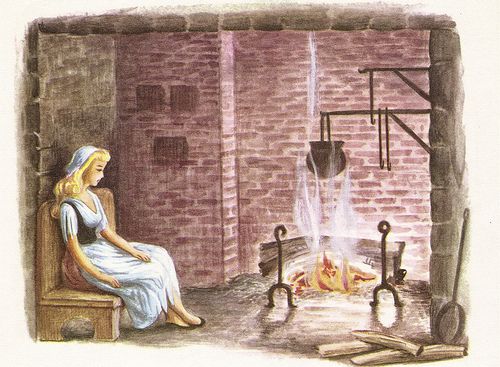
  FEAST OF THE LORD’S BAPTISM [C] What do you think about when you hear the name “Cinderella?”  More than likely, you’ll find yourself thinking about the ball, the prince, the glass slipper. And yet, these elements relate to the second half of the story. They don’t explain how she comes to be identified as “Cinderella.” That source of information can be traced to the first half of the story. No, it doesn’t make for happy reading. The author describes a Cinderella who is being thoroughly exploited—she is being exploited by her step-mother and her two step-sisters. Whatever is tedious, all of the menial tasks, these are reserved for Cinderella. She has to dust, she has to sweep, she has to scrub the floor, do the laundry, wash the dishes. If that wasn’t enough, she is also responsible for tending the fireplace. The efforts at the fireplace leave her coated with ashes. Ashes are basically cinders. Meanwhile, the French term for girl is “ella.” Put it together and you arrive at th...